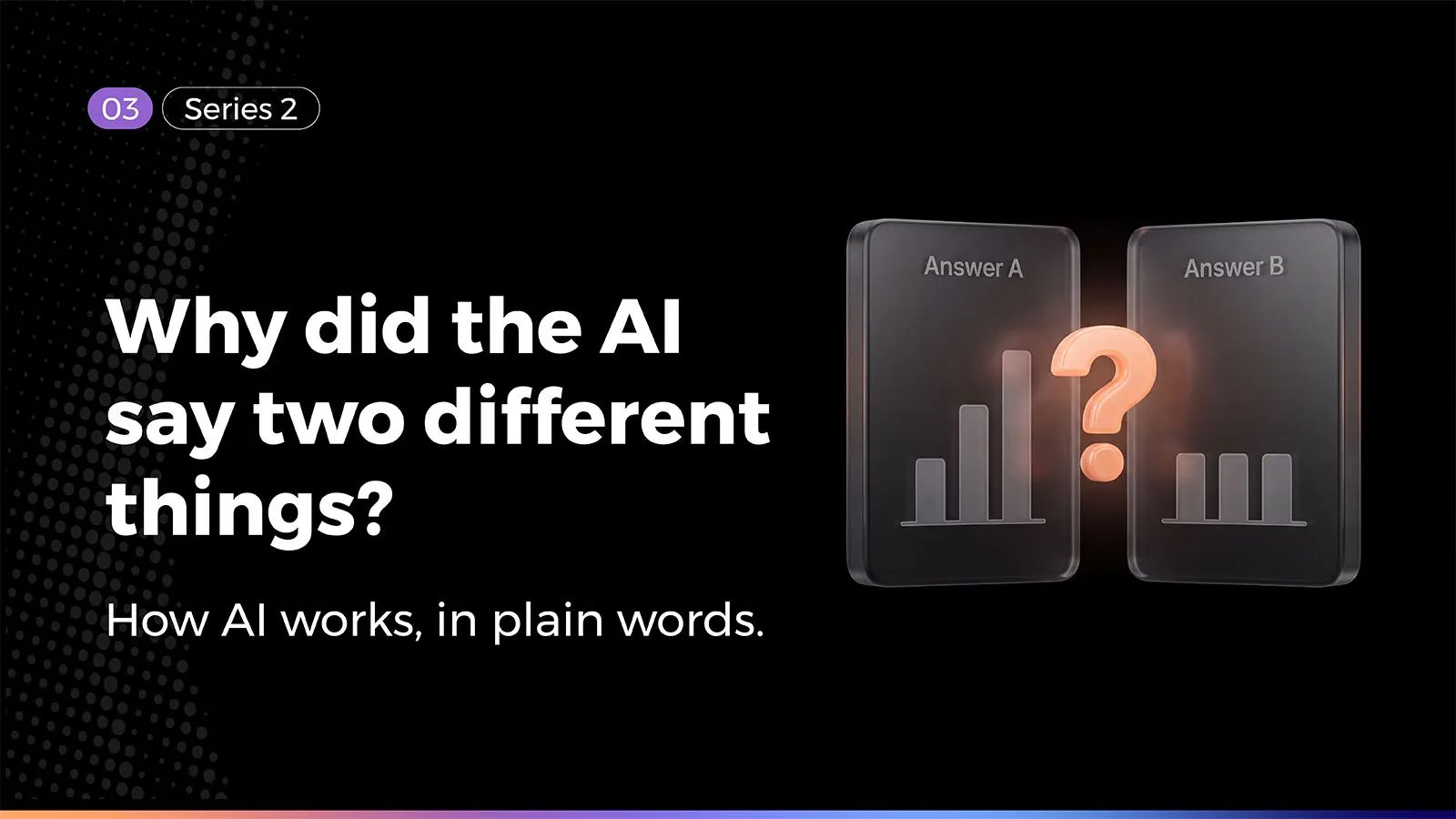
Two partners at the same firm ask an AI tool the same question on the same morning. One answer says the figure is up. The other says it is flat.
They compare screens. They typed almost the same words, and both answers sound sure of themselves. So which one is right, and why did the tool say two different things?
It is not a database
Most of us picture AI as a very fast search engine. You ask, it looks the answer up, it tells you. That is not what happens.
An AI model writes its answer one word at a time. At each step it picks a likely next word, based on patterns it learned from a huge amount of text. It is closer to a writer than a filing cabinet. That is why the answers read so smoothly. It is also why the same question can come back worded, and even concluded, differently each time.
The well-read colleague
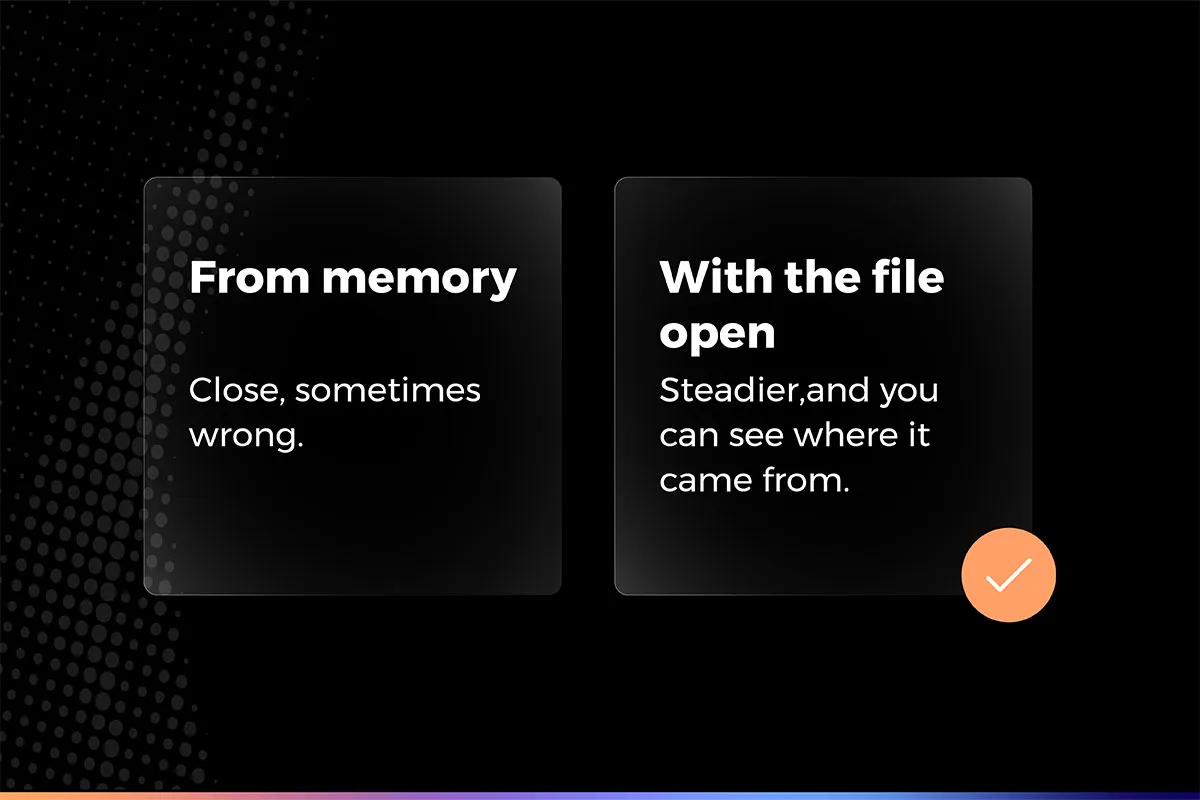
Think of a colleague who has read a great deal and has a good memory, but who answers you from memory without opening any file. Most of the time they will be close. Sometimes they will be confidently wrong. And if you ask them twice, you may hear two slightly different versions.
Now think of the same colleague, this time with your file open in front of them and a checklist to follow. Their answer is steadier, and you can see where it came from.
That difference is the whole story. The person is the same. What changes is what you give them to work from.
“The model is the same. What changes is what you give it to work from.”
Why this matters for numbers
For a poem or a first draft, variety is fine. For a figure that goes into a deliverable, it is a problem. You want the answer to come from your documents, and you want the work to follow the same steps every time.
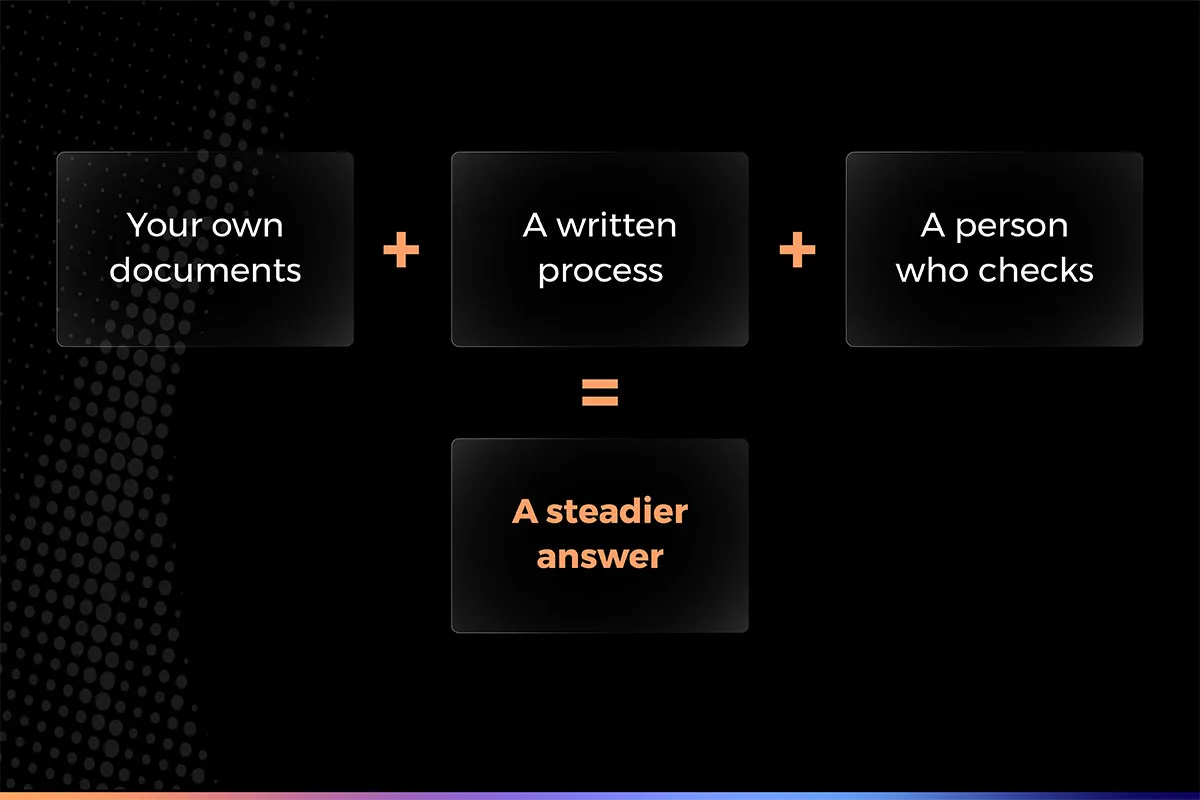
Three things make an AI result steadier:
- Your own documents. The AI answers from the files you point it to, not from what it vaguely remembers.
- A written process. The steps are set down once and followed each time, instead of improvised in a chat box.
- A person who checks. Someone reviews the result before it leaves the firm.
None of this makes AI perfect. It makes it far easier to trust and to correct.
A quick check you can run today
Take a question your team asks AI often. Ask it three times, each time in a new chat. Compare the answers.
If they match in the ways that matter, you have learned something useful. If they differ in a figure, a date or a conclusion, you have learned how much weight that tool deserves on its own. Either way, it takes five minutes and costs nothing.
The takeaway
When an AI gives you two answers, it has not broken. It is doing what it was built to do. The fix is not to trust it more or less. The fix is to change how you use it, so the answer comes from your information and your process.
That is how we approach Vista, the Private AI from Archivista. The firm’s documents and the firm’s written steps come first, and the model works inside them.